(and what to do about it)
If your team feels flat, stretched, or harder to motivate than they used to be, you’re not imagining it.
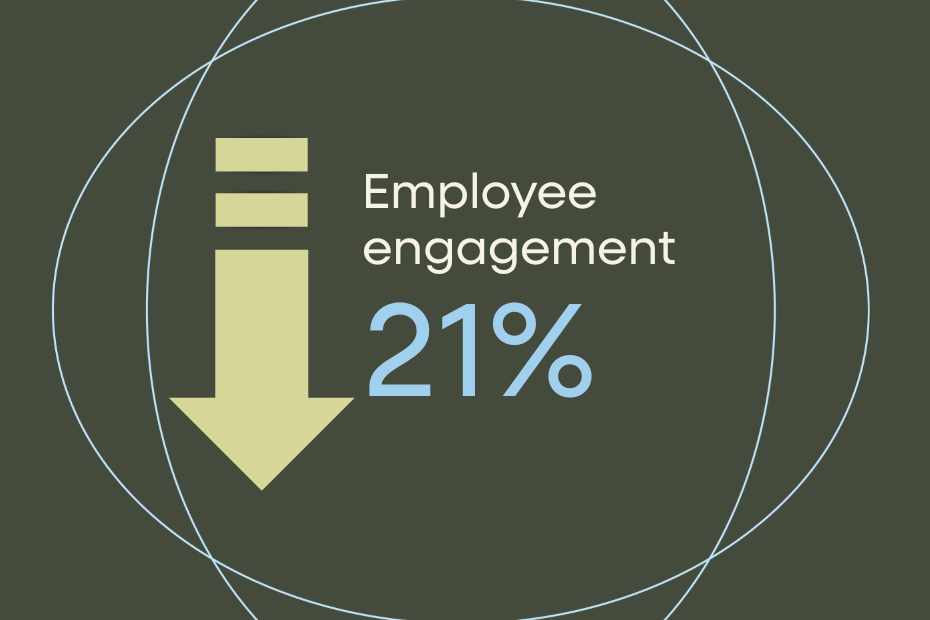
According to Gallup’s State of the Global Workplace 2025, global employee engagement has dropped to just 21%, costing the world economy US$438 billion in lost productivity last year alone.
But the most telling insight isn’t about employees, it’s about managers.
The real pressure point: your managers
Gallup’s data shows that manager engagement has fallen sharply, while individual contributor engagement has remained flat. Why does this matter?
Because 70% of a team’s engagement is directly influenced by their manager.
In Australia and New Zealand, only 23% of employees are engaged, while nearly half report daily stress and 42% are actively or passively looking for another role.
This isn’t a “people are lazy” problem.
It’s a leadership systems problem.
Most managers were never trained to manage
Less than 44% of managers globally have received any formal management training, yet they’re expected to:
- manage performance
- handle conflict
- support wellbeing
- drive productivity
- lead change
All while still doing their “day job”.
The opportunity most businesses are missing
The data is clear: when organisations invest in manager capability, clarity and support, engagement and productivity rise, and turnover drops.
Gallup estimates that if engagement was lifted meaningfully, up to US$9.6 trillion in productivity could be unlocked globally.
That’s not about perks.
It’s about better systems, clearer expectations, and confident leaders.
How UPP HR supports this
At UPP HR, we work with business owners to:
Because when managers thrive, teams follow, and businesses grow.
If this data feels uncomfortably familiar, it might be time for a different approach to HR.